
Designing with Water: A New Blueprint for South Florida

You are invited to join us for an honest and optimistic look at the future of our region. Next Saturday, February 28th, Future Vision Studios is hosting a session at the Perez Art Museum Miami (PAMM) to present a data-driven roadmap for a resilient City. As part of Open House Miami 2026, we are showcasing how South Florida can adapt and thrive given the changing climate and weather events. This session focuses on real strategies that directly impact our zoning, insurance markets, and historic districts.
We will be presenting three specific frameworks—Buoyant City, Salty Urbanism, and The Coastline. Together, these projects represent a blueprint for how development, historic preservation, and regional infrastructure can evolve to protect our community and create new public park space.
Three Frameworks for Adaptation
Buoyant City (Allan Shulman, FAIA): This framework focuses on historic districts like South Beach. It proposes active preservation strategies, such as elevating structures and adapting ground floors, to allow heritage neighborhoods to evolve without losing their identity.


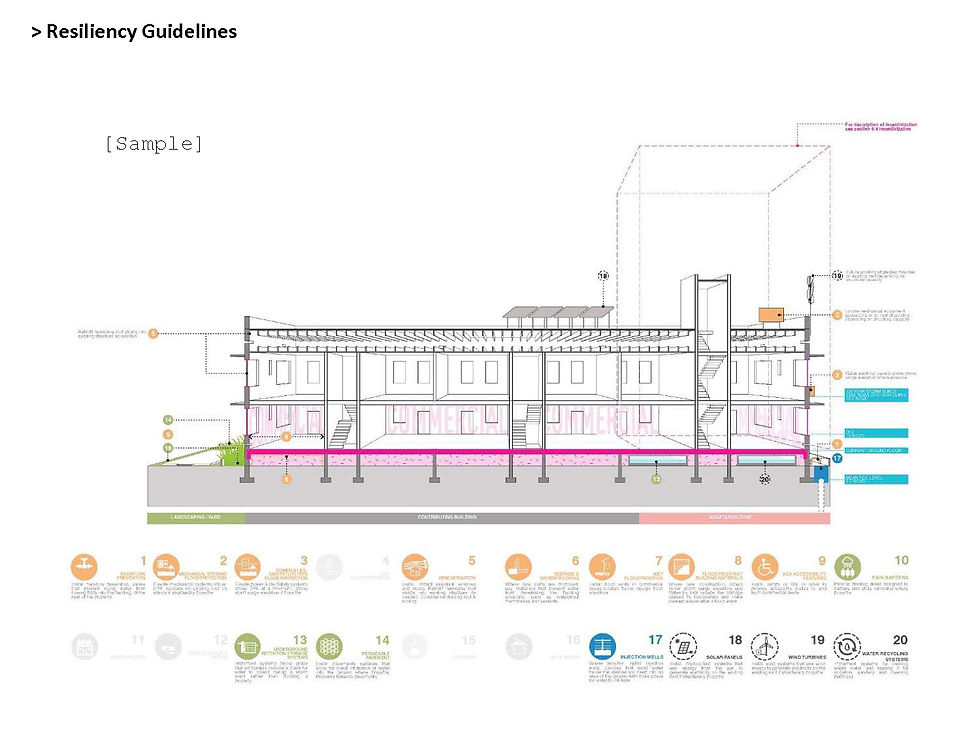
Salty Urbanism (Jeffrey Huber, FAIA): This is a design manual for coastal zone adaptation. It integrates ecological systems into the urban fabric to manage rising sea levels and salinity by utilizing the landscape to absorb water while densifying higher ground.


The Coastline (Aaron DeMayo): This is a regional defense system that utilizes a vegetated berm and a network of tidal locks. By placing interventions at the Miami River, Haulover, and the Stranahan River, the system can reduce the water pushed into these areas during storm surge or major rain events, protecting hundreds of miles of waterfront and inland communities.

Managing the Transition
While no single project can stop the long-term effects of sea-level rise, The Coastline provides the essential physical safety needed to manage the coming decades. Protecting the region from major storm surge can help prevent the catastrophic events that force sudden, unmanaged displacement.
This infrastructure gives the City the time and stability it needs to navigate complex future transitions. It allows us to extend our planning horizons and to use strategic tools such as managed retreat and Transfer of Development Rights (TDR) in an orderly way. By reducing the need for duplicative infrastructure builds, we can focus on a unified long-term vision.
A Regional Greenway & Public Amenity
The Coastline is designed to be a massive public amenity. It expands the waterfront in Brickell to provide acres of wide open park space, connecting The Underline to Downtown Miami and extending across the I-395 causeway. This upgraded infrastructure links directly to South Pointe Park and the continuous greenway that extends to Bal Harbour, creating a unified park system that spans multiple municipalities.

Join the Conversation
With over 300 RSVPs already, the community interest in these solutions is clear. We invite you to join us next Saturday at 2:00 PM at the PAMM.
Livestream: For those who cannot attend in person, the event will be recorded and live-streamed on the PAMM’s YouTube channel.
Together, we can design a unified and resilient future for the City.


